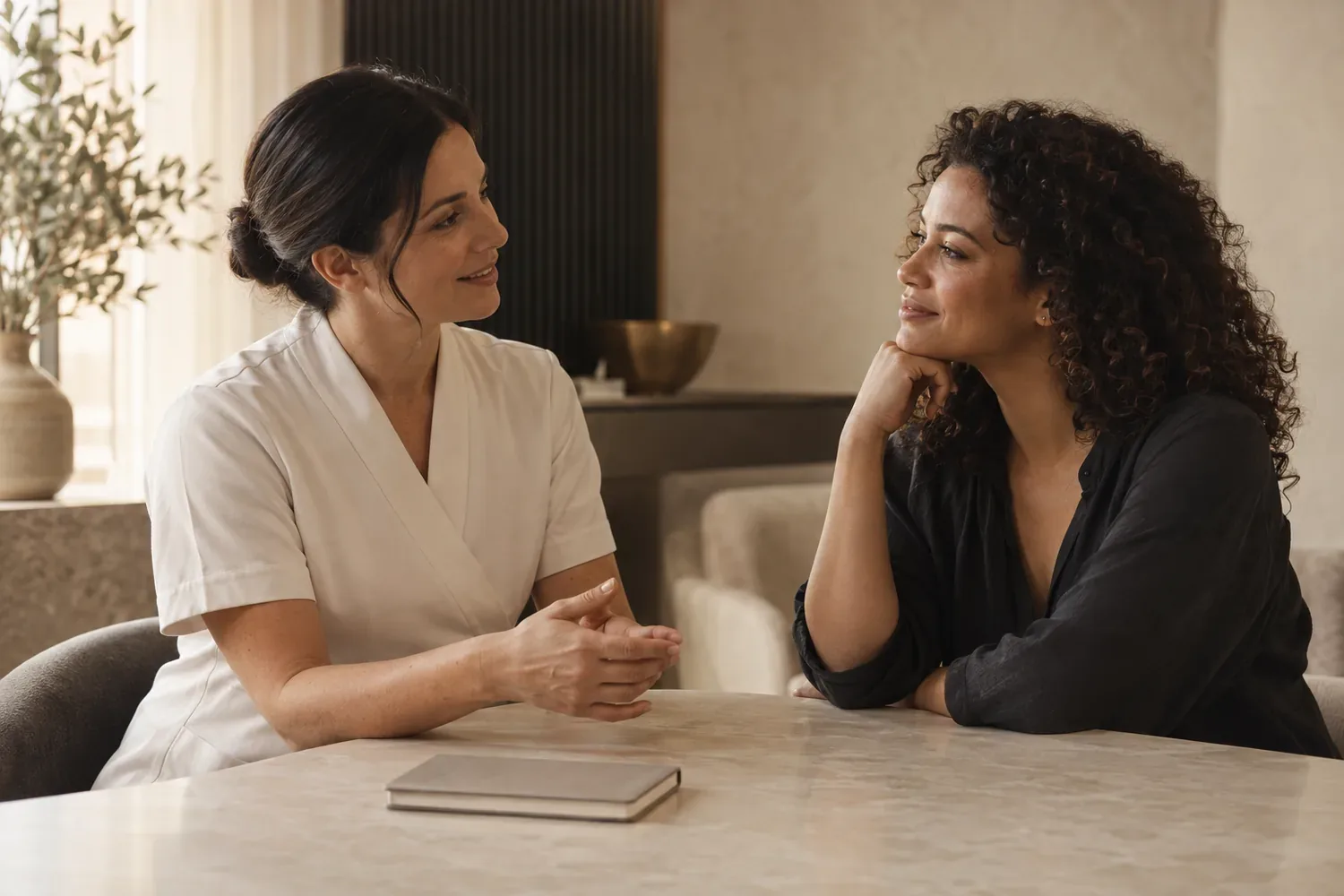
The first forty-eight hours
Straight after treatment, skin usually looks flushed and feels warm and tight. Many people compare it to mild sunburn. It can also feel more sensitive to products you normally tolerate without thinking.
This is the period where doing less is doing more. Keep the routine short, keep your hands off your face, and leave the skin alone to get on with it.
How the week usually goes
| When | What is common | What helps |
|---|---|---|
| Day 1 | Redness, warmth, a tight feeling | A gentle cleanser, a plain moisturizer, nothing active |
| Day 2 | Redness fading, skin may feel rough | Keep it simple; avoid heat, saunas and hard exercise |
| Day 3 to 4 | Dryness, sometimes light flaking | Moisturize, do not pick or exfoliate the flaking away |
| Day 5 to 7 | Skin looking more like itself | Reintroduce your usual products one at a time |
| Through the week | Skin is more vulnerable to sun | Daily sunscreen, and shade where you can |
This is a general pattern, not a promise. Depth, the area treated and your own skin all change how the week looks. Your provider’s instructions come first if they differ.
What to leave alone, and for how long
Makeup is usually left off for at least the first twenty-four hours, and longer if you have been told so. Retinoids, acids and vitamin C are paused until the skin is comfortable again — reintroducing them too early is the most common reason a recovery feels worse than it should.
Heat is the other one people underestimate. Saunas, hot yoga, steam and hard exercise all raise facial blood flow at exactly the point your skin would rather be left quiet.
And then there is the flaking. It is tempting to help it along. Do not. Letting it come away on its own is the difference between a settled week and a longer one.
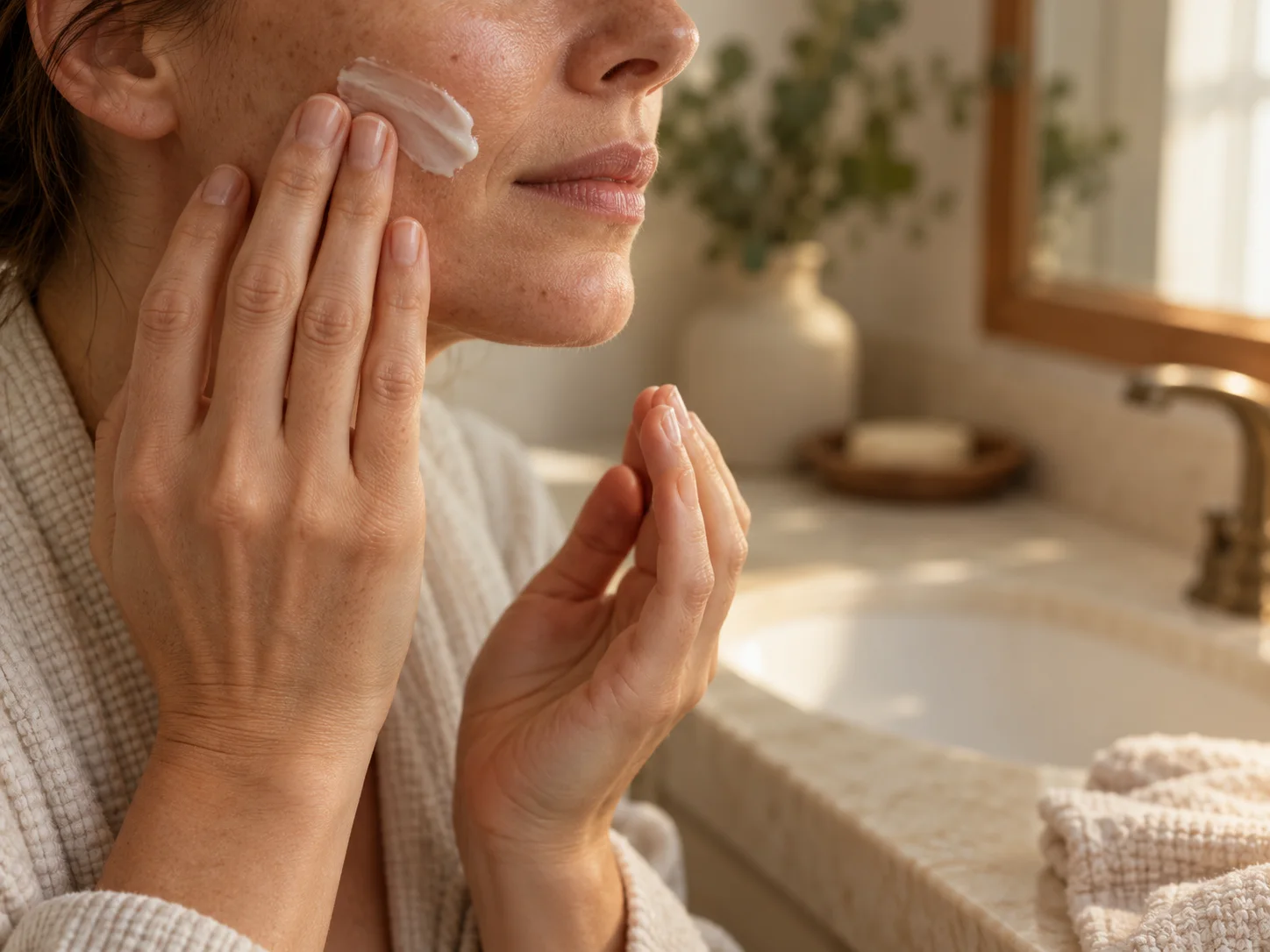
Sun protection is the real aftercare
Freshly treated skin is more reactive to ultraviolet light, and sun exposure during recovery can leave uneven color that lasts far longer than the redness did.
Daily sunscreen, a hat, and shade when you can manage it. This matters more if you are prone to pigment changes — and it is worth raising before treatment, not after. Our guide to uneven tone and dark spots explains why.
When to stop waiting and call
None of these are a reason to panic, and all of them are a reason to make contact rather than to wait and see. Get in touch and describe what has changed and when.
- Redness that spreads or deepens after day three instead of fading.
- Pain that increases rather than settles.
- Pus, yellow crusting, or an area that feels hot to the touch.
- Fever or feeling generally unwell.
- A cold sore starting, if you are prone to them.
Judging whether it worked
The visible part of recovery is over within a week. The part you actually booked for is not. Collagen-related change develops over weeks, and microneedling is usually planned as a course of three to four sessions for that reason.
Take a photograph in consistent light before you start and again a few weeks later. Memory is a poor judge of gradual change, and a photograph will tell you more than the mirror will.
If you are weighing this treatment against RF microneedling, our comparison of the two sets out what the radiofrequency adds.
This article provides general information. Individual treatment advice should follow an assessment by an appropriately qualified professional.